 |
Edition 4
2nd October, 2026 |
|
|
|
|
|
|
You have backed the idea that how India treats animals belongs in its boardrooms, banks and government offices.
In the past 90 days, that idea has gained ground. Eleven leading companies, including three banks and two asset managers, formed an alliance to raise animal welfare standards across food supply chains. Physicians told India it has been asking the wrong question about protein, and a former Chief Justice of India joined business and legal leaders for an evening on compassion and system change.
Here is what moved, who moved it, and where you come in.
 |
Guest Editor and IKC Steering Committee Member
Dr Rajeena Shahin
Medical Director, Physicians Association for Nutrition (PAN) India
|
|
|
The Big News
Private Policy
First industry-led alliance to raise animal welfare standards across food supply chains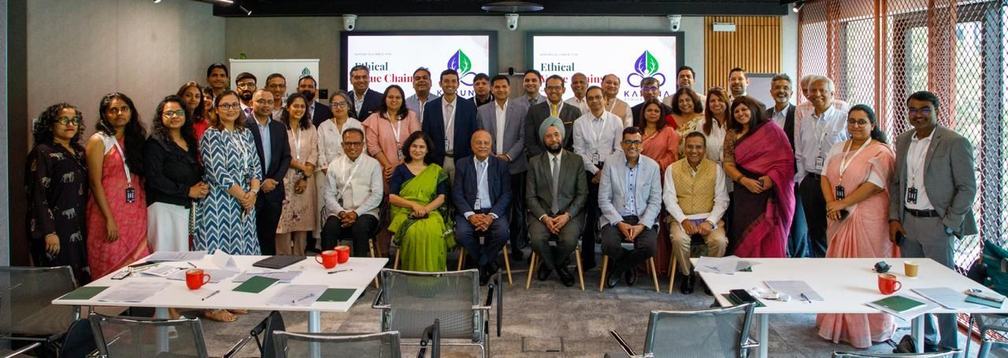
Eleven leading companies in India launched the first industry-led alliance, Karuna Ethics Alliance (KEA), in a commitment to improve animal welfare standards across food supply chains.
- Axis Bank
- Enam Investments
- HDFC Asset Management Company
- HDFC Bank
- IndusInd Bank
- Kotak Mahindra Asset Management Company
|
- Motilal Oswal Financial Services
- Reliance Retail
- Sodexo India
- Tata Consumer Products
- The Leela Palaces, Hotels and Resorts
|
|
This is a proactive step to build shared standards and take collaborative action, in an environment where investors, regulators and consumers are increasingly questioning how food is sourced. Speaking at the launch, Sunil Dsouza, CEO & MD, Tata Consumer Products shared, “Large-scale change in food systems requires collaboration across the value chain. KEA provides an important platform for businesses to come together, build common standards and collectively raise the bar for responsible sourcing and animal welfare in India.”
KEA is an initiative of the India Karuna Collaborative (IKC). IKC provides strategic stewardship and convening support. All decision-making rests with KEA’s Governing Council, in accordance with its Charter.
Find out more about KEA →
Email us to read KEA’s detailed charter
|
|
Reframing the narrative on protein
|
Health
India is asking the wrong question about protein
A new white paper by IKC Steering Committee member Physicians Association for Nutrition (PAN) India states that India’s protein conversation has fixated on the wrong measure: grams on a label. Released on 1 September at the start of National Nutrition Week, Rethinking Protein in Plant-Based Diets posits that protein adequacy depends on the whole eating pattern of the individual - whether the diet is varied, provides enough calories, and suits the person eating it, given their life stage and health.
Some key ideas from the white paper
|
|
“Complete vs incomplete” protein is an outdated idea. Almost all plant foods, including pulses, grains, nuts and seeds, contain all nine essential amino acids. What differs is how much, and how digestible. |
|
|
Most healthy adults are not at risk. The ICMR-NIN reference intake of about 0.83 g per kg of body weight (roughly 50 g a day for a 60 kg adult) can generally be met through a varied diet with enough protein-rich foods. The real risk sits with specific groups, including growing children, pregnant and breastfeeding women, older adults, etc., who need individual attention, not blanket high-protein messaging. |
|
|
Plant protein intake associated with lower risk of death. In an analysis of more than 715,000 people, higher plant-protein intake was associated with a lower risk of death from all causes and from heart disease. |
| “What about protein?” is usually the first objection when a canteen, hospital or public meal programme considers more plant-forward menus. This paper gives decision-makers a physician-led, evidence-based answer. |
The paper was extensively written about in the media. Read an article.
|
When evidence informs policy
|
Policy
India’s food-processing incentives may soon include plant-based protein
After sustained engagement with the Ministry of Food Processing Industries (MoFPI), IKC Steering Committee member, The Plant Based Foods Industry Association (PBFIA), has seen its recommendations included in MoFPI’s proposal to bring plant-based food products and protein ingredients under the Production Linked Incentive Scheme for the Food Processing Industry. The proposal has now gone to the competent authority for approval.
If approved, the scheme could:
|
|
draw investment into plant-based food and protein manufacturing, including domestic capacity for protein concentrates and isolates |
|
|
spur innovation in plant-based food categories |
|
|
create stronger markets for farmers and FPOs growing pulses, legumes and other protein-rich crops |
|
|
widen access to affordable, nutritious protein for Indian consumers |
|
|
position India as a competitive global hub for plant-based foods and protein ingredients |
| Why it matters: Inclusion in a flagship incentive scheme would signal that plant-based protein is part of India’s food-processing and protein-security strategy, not a niche. It also answers a call in PAN India’s protein white paper: that policymakers support affordable pulses and legumes. |
|
|
|
In the room
Karuna Conversations
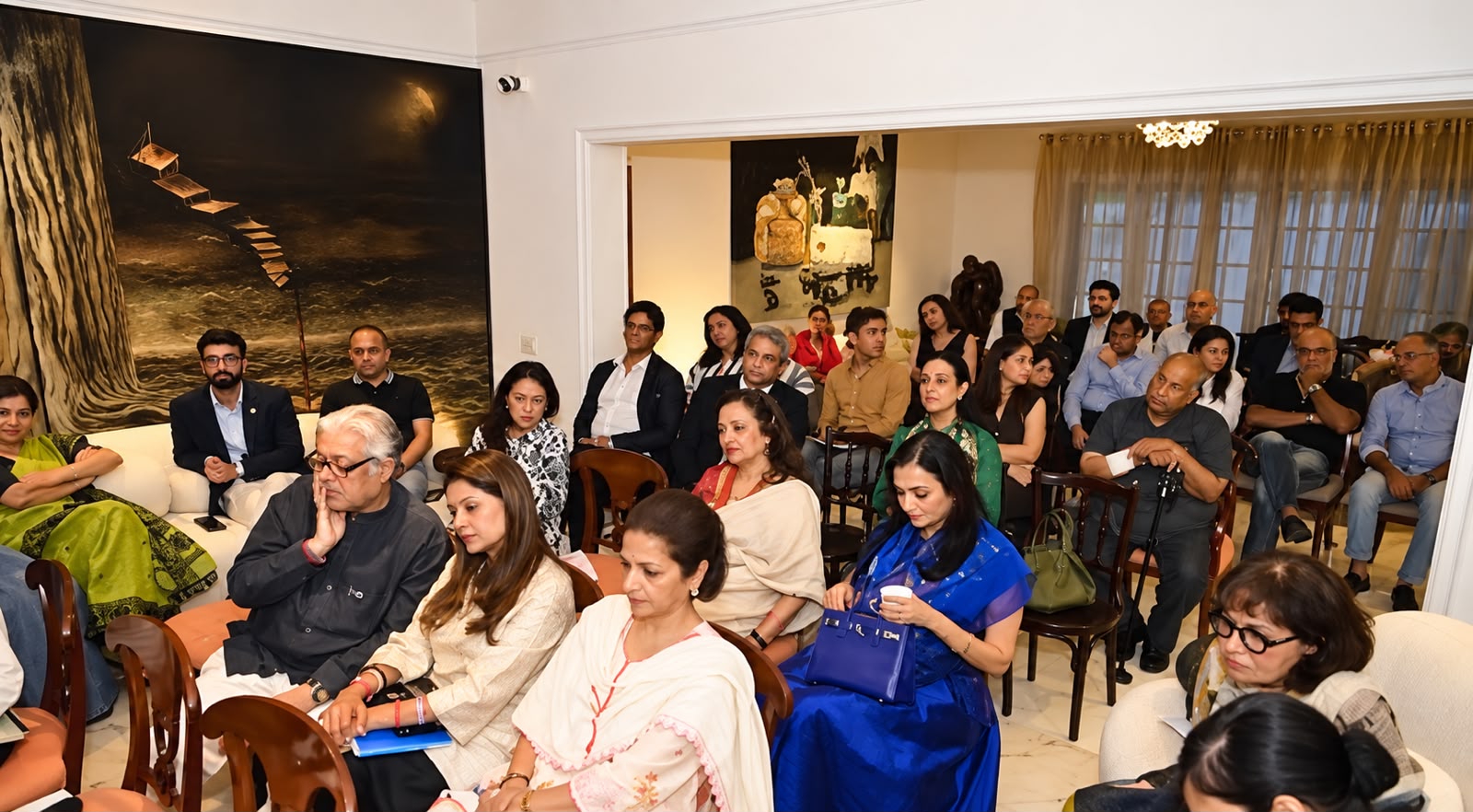
VC, entrepreneur, and IKC signatory Sethu Vaidyanathan, hosted the first of our Karuna Conversation series. The closed-door evening on 9 August in Delhi was themed Consciousness, Compassion and System Change. Justice D.Y. Chandrachud, former Chief Justice of India, joined other business, legal, and cultural leaders, each of whom brought a unique perspective to transforming food systems.
|
Leaders in the room included
|
Subhrakant Panda
Managing Director, Indian Metals & Ferro Alloys
Siddharth Bindra
Managing Director, BIBA
Rajiv Memani
Regional Managing Partner, EY Africa India
Atul Aggarwal
Managing Director, Sterling Tools Ltd
|
Sumita Somany
Director, AGI Greenpac
Sanjay Kapoor
Director, Genesis Colors Ltd
B.S. Manik Nihal
Karanjawala & Company
Rajan Karanjawala
Karanjawala & Company
Gopal Jain
Senior Advocate, Supreme Court of India
|
|
| Karuna Conversations are small, private evenings hosted with members of our network. If you would like to host one for peers in your city, write to Shivani. |
On campus
|
300
students
IIM Raipur
|
On 19 August, IKC Steer Co member - India Animal Fund (IAF) co-founder and board member Parag Agarwal led a session on animal sentience, “Is our circle of compassion expanding?” for 300 students of IIM Raipur on how animal, human and planetary health connect. Following the talk, students were invited to create an evidence-based, 60-second video on the truth behind everyday dairy or egg production. |
|
|
250
students
Bosch Foundation
|
On 15 July, World Youth Skills Day, Varsha from IKC Steer Co member, Redefining Ahimsa led a Food-Planet-Health session for 250 students from ITIs, polytechnics and vocational training centres, along with trainers from the Foundation’s employability and automotive skills programmes. |
|
|
|
Ideas in print
Governance
Why food-system integrity belongs in the boardroom
The first article in a two-part series for Institutional Investor Advisory Services (IiAS) makes the case that how food is produced and sourced across the supply chain is a board-level governance question, not only a CSR one.
The authors are Parag Agarwal, Co-Founder & Board Member, India Animal Fund, and Rituj Sahu, Program Director, Food Systems (India) at IKC Steering Committee member Asia Research & Engagement (ARE).
|
|
Karuna Voice
“
Sentience exists in everything that has life. It’s important that we respect that sentience.
Shailesh Haribhakti
Chairman, Shailesh Haribhakti & Associates

Watch the full video →
|
|
What you can do now
Get a Karuna Box or an Ahimsa Box this festive season
We’re excited to share that IKC Steering Committee member Redefining Ahimsa Foundation has launched an Animal Cruelty-Free Diwali Gifting Campaign.
Take a look at this catalogue of handmade gift boxes that are animal cruelty-free, sustainable, and help artisans. You have a choice between a Karuna Box and an Ahimsa Box. All profits go towards funding Redefining Ahimsa Foundation’s work to protecting farmed animals in India.
Place an order and share with your network.
This Deepawali, make your corporate gift a kinder one – for people, animals, and the planet
The usual choices for gifting at some of India’s largest employers are leather goods for the executive tier and dairy-based mithai for the festive tier. Underneath both sits the same system that puts animals into a cycle of continuous breeding, separation from calves, and slaughter.
This festive season, add one short “Materials & Ethical Sourcing” clause to your gift policy, defaulting to cruelty-free wherever a comparable option exists. This single clause converts a values statement into visible practice, reportable in ESG / BRSR disclosures. It taps into existing demand, because around 80% of corporate buyers now prefer eco-friendly gifts. Further, the leading alternatives use banana, coconut and sugarcane waste and smallholder sourcing; they ship pan-India at comparable price and quality.
|
|
Karuna Connect is a newsletter from India Karuna Collaborative, uniting the people, ideas and initiatives building a kinder, more compassionate future for animals, people and the planet.
Follow IKC on LinkedIn · indiakarunacollaborative.org
[UNSUBSCRIBE]
|
|
|
|